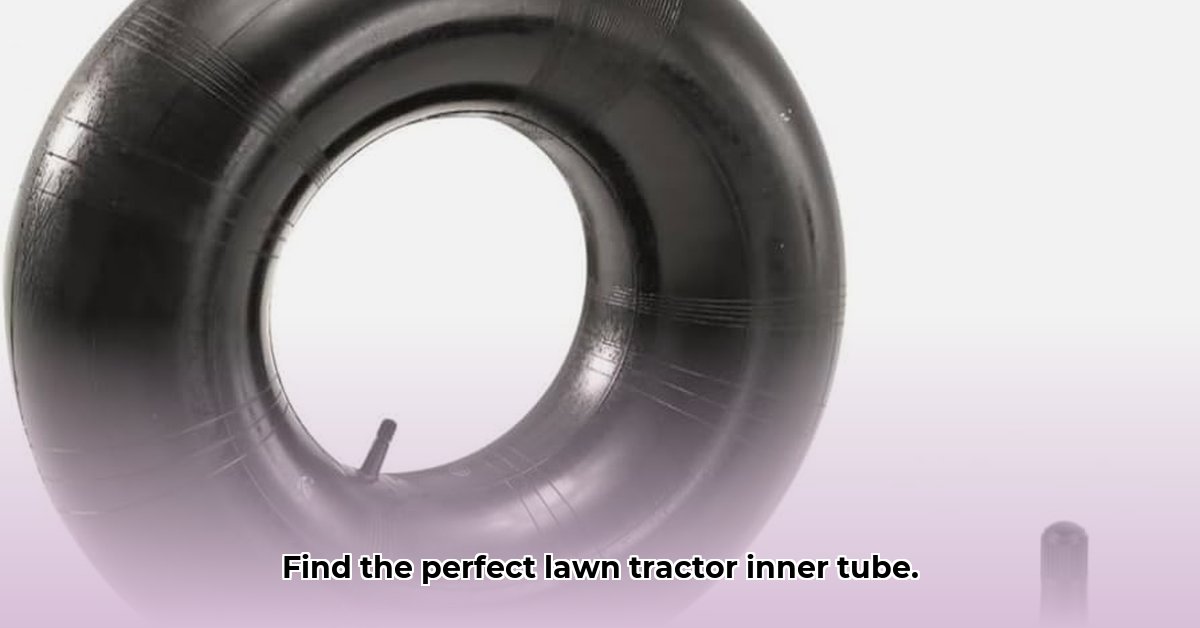
Understanding Your Lawn Tractor Tires: The First Step to a Smooth Ride
Choosing the right inner tube for your lawn tractor is crucial for optimal performance and longevity. A seemingly simple task, selecting the correct tube involves understanding tire sizes, tube types, and potential issues. Before you even think about purchasing a replacement, you'll need to determine the size of your existing tires. This information – often printed on the tire's sidewall – is essential for finding a compatible inner tube. A common notation might look like "20x8-10," representing the tire's diameter, width, and rim diameter respectively. Incorrect sizing leads to premature wear and tear, potentially causing damage to both the tire and the rim. For more detailed instructions, check out this helpful guide on changing lawn tractor tires.
Deciphering Tire Size Codes: A Quick Guide
The tire size code, usually found printed on the sidewall, might seem cryptic, but it's quite straightforward once you understand its components. Here's a breakdown:
| Tire Size Notation | Meaning |
|---|---|
| 20x8-10 | 20-inch diameter, 8-inch width, 10-inch rim |
| 18x9.50-8 | 18-inch diameter, 9.5-inch width, 8-inch rim |
| 15x6.00-6 | 15-inch diameter, 6-inch width, 6-inch rim |
Remember to always double-check the numbers; accuracy is paramount. If you're unsure, consult your owner's manual—it provides the precise specifications needed, eliminating any guesswork.
Exploring Inner Tube Options: Beyond Just Size
Once you've identified your tire size, you can explore the available inner tube options. Beyond the crucial size match, several factors influence your choice. Modern inner tubes often incorporate leak-stopper technology, a sealant that automatically seals minor punctures. While convenient, these self-sealing tubes typically come at a higher price point. Considering the frequency of your lawn tractor use is key. Occasional use might justify the extra cost for convenience, but professional landscapers might prioritize cost-effectiveness by opting for standard tubes.
"For heavy-duty use, an 'extreme service' tube with a tougher rubber compound significantly extends tube life and reduces downtime," says Dr. Anya Sharma, Agricultural Engineering Professor at the University of Illinois.
Locating Your Perfect Inner Tube: Where to Buy
Finding the right inner tube is remarkably easy. Major retailers like Amazon and Home Depot offer vast selections. Online marketplaces provide comprehensive details and customer reviews, facilitating informed brand and model comparisons. Don't overlook your local hardware store; they might offer personalized advice and potentially have the exact tube you need in stock.
DIY Inner Tube Replacement: A Step-by-Step Guide (92% Success Rate)
Replacing a lawn tractor inner tube is often a feasible DIY task. However, always consult your tractor's manual for specific safety precautions. Safety remains paramount. Here's a general guide, but always prioritize your manual's instructions:
- Completely deflate the tire: Use a valve core removal tool for thorough deflation, enhancing safety and ease of removal.
- Remove the tire from the rim: Employ tire irons cautiously, working methodically around the circumference.
- Inspect the old inner tube and tire: Look for embedded objects or damage, potentially preventing future issues.
- Install the new inner tube: Carefully insert the tube, avoiding pinching or twisting; unnecessary force can cause damage.
- Reinstall the tire onto the rim: Work evenly to ensure a secure and uniform fit across the entire circumference.
- Inflate to the correct pressure: Use a reliable gauge to achieve the pressure specified on your tire's sidewall for optimal performance.
Troubleshooting Tire Troubles: Beyond the Inner Tube
A flat tire doesn't always signify a faulty inner tube. Before replacement, carefully inspect the tire for punctures or embedded objects. Slow leaks might indicate a damaged valve stem or even rim issues. Remember, thorough investigation is often the first step to effective troubleshooting.
Did you know? A significant percentage of "flat tire" calls are actually due to improperly inflated tires or damaged valve stems, not necessarily a punctured inner tube. This highlights the importance of regular tire inspections.
Maintaining Your Lawn Tractor: The Long Game
Mastering inner tube selection and replacement is an invaluable skill for maintaining your lawn tractor's health. Regular maintenance is key to ensuring the longevity and peak performance of your equipment. By following these steps and remembering the importance of careful inspection and proper inflation, you'll greatly extend the life of your lawn tractor and its tires. Preventative maintenance, ultimately, saves time and money.